Overview
Emberatlas explores the curator's task of turning a collection into a coherent visitor experience. A gallery plan provides spatial context, while object records connect photographs, story drafts and placement decisions. The concept includes route planning and exhibition review, with fictional artifacts and illustrative collection information.
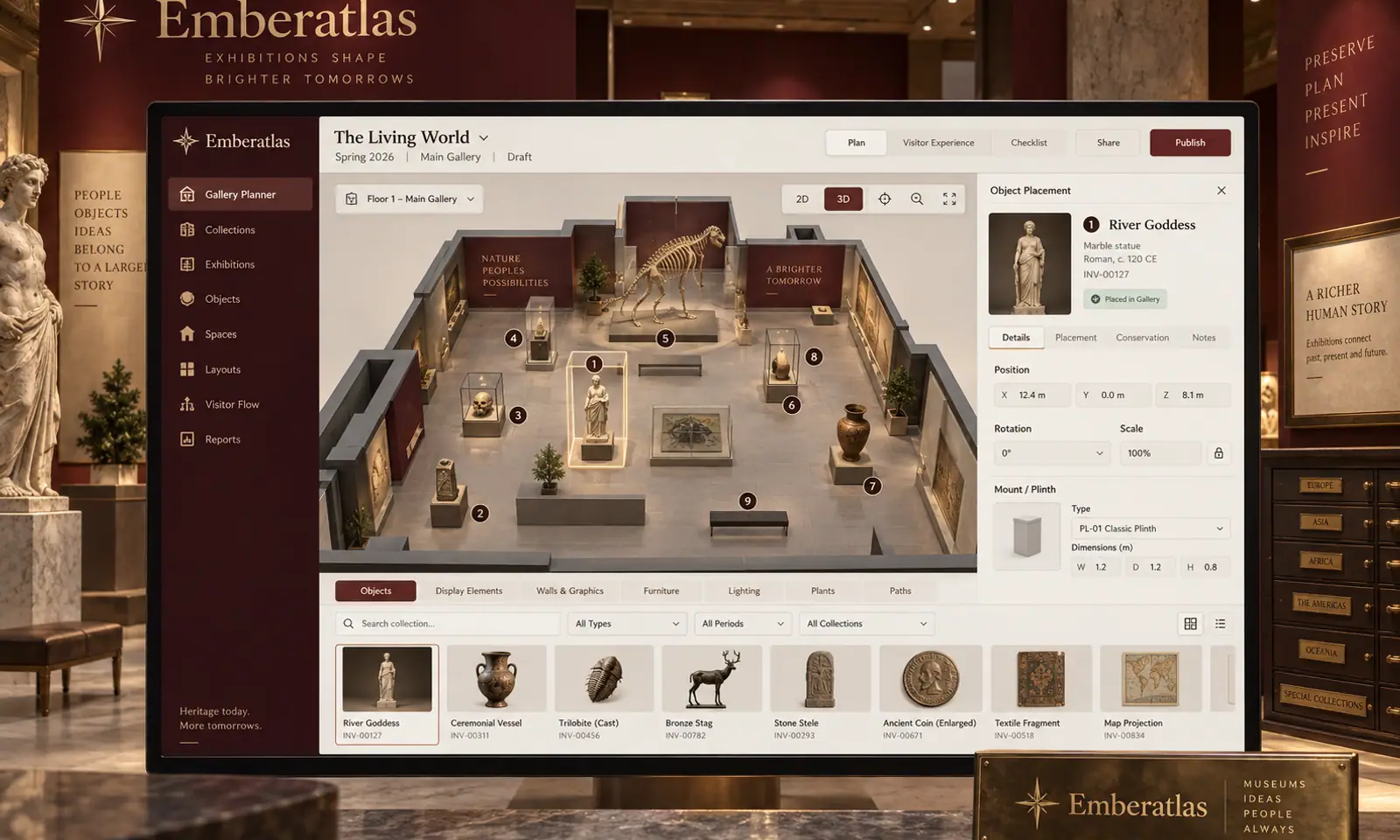
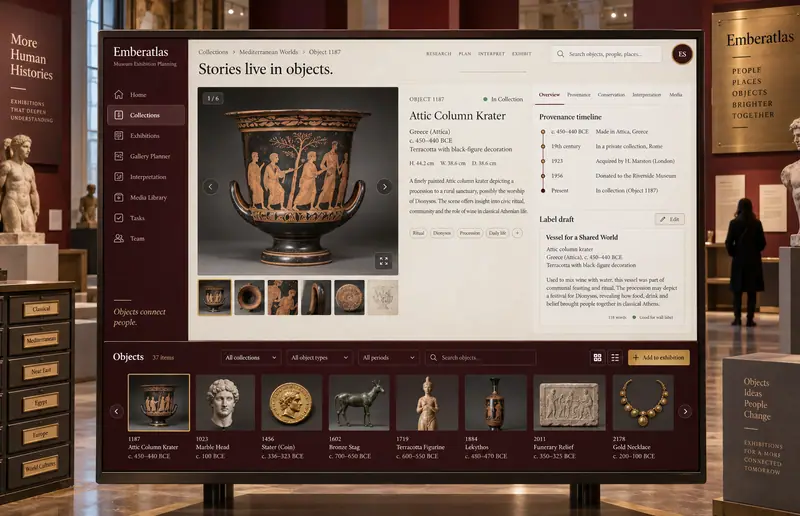
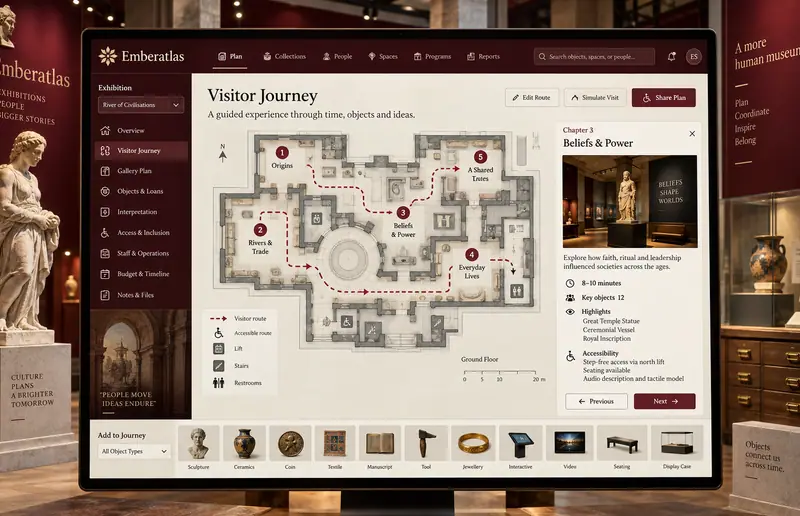
Original museum exhibition planning interface concepts with fictional project data and illustrative content.
Challenge
An exhibition exists simultaneously as a physical layout and a sequence of stories. When plans, object records and label drafts are reviewed separately, the team can miss how a placement change affects the visitor's journey.
- Connect object stories to their proposed gallery position.
- Make the sequence of exhibition chapters visible.
- Keep wall layouts and curatorial feedback together.
Solution
A spatial gallery planner anchors the experience, supported by a contextual inspector and object tray. Object records use editorial storytelling, route planning uses connected chapters and exhibition review uses wall elevations with positioned comments.
- Gallery planner: Arrange exhibition objects on a gallery plan and inspect their placement.
- Collection stories: Develop an object's story with imagery, illustrative records and label drafts.
- Visitor journey: Connect exhibition chapters into a proposed visitor route with contextual notes.
- Exhibition review: Review artwork and label arrangements together on a gallery wall elevation.
Results
4
Specialized
concept views12
Proposed
feature areas